There is a saying that it takes a village to raise a child. In very much the same way, it takes a city to raise a music scene. Atlanta has always been a bustling city, home to many industries. In the past ten years or so, Atlanta has quickly grown into one of the biggest and most densely populated cities in the Southeast. Alongside its other growing industries, Atlanta’s arts have also grown exponentially over the years. The film industry has grown into one of the best in the country, the culinary arts has placed Atlanta in the top 20 “foodie” cities in the country, and the music industry’s hip hop capital. Often living in the shadow of Atlanta’s massive hip-hop scene, Atlanta’s red-headed step child is its DIY rock scene, which is now being revitalized by a wave of young musicians.
The COVID pandemic gave many people more time than they knew how to use, with everyone being confined to the great indoors. Many young people took this time to either start learning an instrument, refine their craft, or start a band. Once lockdown was lifted, a new wave of musicians was let loose on the Atlanta DIY scene, with tons of young new bands playing a multitude of rock genres. This scene of bands that have only been around for the past couple years has grown and will continue to grow into something much more, through the continued support of the community.
Rope Bridge Records
An important facet of the community are the tape labels, or record labels, of Atlanta, which are often non-profit entities that exist solely to help musicians grow. One of such is Rope Bridge Records, owned and operated by Ryan Myers. After moving to Atlanta 11 years ago, Myers became involved in the music scene, making friends by attending shows in university and building connections with different bands in the scene at the time. After some time, Myers decided to start Rope Bridge in November of 2021 as a way to produce physical media for bands in the form of cassette tapes.
“I had been a part of the Atlanta scene for eight years at that point. Over time, I met a bunch of people and had all these connections, and eventually I was like, ‘I should do a tape label,” said Myers. “I thought, ‘If no one else is going to, I’ll do it,’ just because I love collecting the artifacts of this local scene that I find to be so unique and special.”
Besides creating physicals for the purpose of cataloging music, Myers began working with bands to enable them to sell physicals of their music. “I do the record label to give bands merchandise to sell, to hopefully make profit beyond the world of streaming revenue and give them an opportunity to have something they can profit off of,” said Myers. Because of the way streaming services are set up, massive amounts of streams are required in order for bands to begin to profit off of streams, which is often impossible for smaller bands. Without revenue, there is little room for improving. The only alternative is playing shows and selling merchandise.
“This way, they can hopefully make more music, and get their music mastered at a higher quality, or recorded at a well known recording studio,” said Myers. “Because all that stuff costs money. Not to mention, it takes time to make the music. So I try to help all that happen.”
Myers also works as a part-time booker for the Masquerade and does work behind the scenes, trying to get smaller bands booked with larger bands to put them in front of larger audiences.
When asked why Myers would give up so much time and dedicate so much effort to create tapes for local bands, Myers responded that “this stuff just needs to be heard. If people need help releasing their projects on tape or promoting it a little bit more, I am happy to help.”
“I want more people to realize what’s going on in Atlanta at the moment. And at the very least, I want to catalog the history of what’s happened,” said Myers. “So if the rest of the world doesn’t catch up, then there’s still evidence that can be found later.”
In Poor Taste Records
Another tape label in the DIY scene is In Poor Taste Records, a collective owned and operated by Maddox Balsamo. In Poor Taste, or IPT for short, operates mostly in the same way as Rope Bridge does; a non-profit project focused on supporting local musicians.
“Getting physical media of music made can be very confusing, scary and expensive. I like to see IPT as a way of helping bands get the physicals they deserve for completely free. We do all our releases for free unless it’s a commission, but it’s all out of pocket on our end,” said Balsamo. “All the money that goes in, the money that people spend on important stuff, goes right back into the next release. So it’s kind of like a nonprofit.”
Beginning in January of this year, Balsamo sought to approach running a tape label in a different way. “I used to run a label called Appendage Records. I was doing that whole label by myself and it was just way too much to handle. So I started In Poor Taste with my friends,” said Balsamo. “When you’re doing a label by yourself, it’s so hard because you have to do everything yourself but with IPT, it’s been running so well because I’ve got so many people helping me out.”
Balsamo shares much of the same sentiment as Myers. As an Atlanta native, Balsamo has been present in Atlanta all his life. “I love making cassettes. I love collecting music. I’ve done it my whole life. I’m a huge nerd about it. So I like being able to do it for my friends for free and they gain something out of it. It’s just awesome. It just feels good,” said Balsamo.
“I think the best part about IPT is watching bands see and hold their music in a physical format, and then watching bands sell that physical format that they got made for free,” said Balsamo. “That’s money that they can use to go record with, or set up a tour, or make more merch with. It genuinely helps, because being in a band, you don’t make a lot of money. It makes me so happy to see bands make money.”
Making Cassettes
In recent years, vinyl has made a huge comeback as a physical medium. But, vinyl is generally too expensive to produce, depending on the quality and quantity, especially for small local artists. The alternative that has risen in its place is the cassette tape, for its accessibility. “I do cassette tape because it’s a more affordable medium to produce, as well as to sell in a local community since everyone else doesn’t necessarily have a surplus of money to go around,” said Myers.
Bummer Hill, a local emo band is releasing their debut album “Far Removed” on cassette in about a week, under a tape label based outside of Atlanta called Chillwavve Records. Dawson Beck, the band’s bassist and a collaborator with IPT, states that “Cassettes are inherently lower key than vinyl, and a lot of the appeal is being able to buy something from bands that may not have had the opportunity to put music onto anything else.”
“Cassettes are very popular in emo culture, and pretty much every weird subculture of music. A lot of kids love it. Our first release really showed me that these kids will buy a tape,” said Balsamo. “If people ask, why should I buy this outdated piece of physical media, if I also don’t have a cassette player? If they love the band I would say, ‘This is a super limited tape and we’re never gonna make these again.’ Plus, it’s just cool to own. You can hold the music in your hand, you can open up the tape and look at all the extended artwork and stuff. I just love that about cassettes.”
Analog media such as vinyl and cassettes has a novelty factor that makes it more valuable to collectors. Apart from that, the tapes made by Balsamo and Myers are usually handmade. In this audio clip, Balsamo and Myers explain the process behind making tapes.
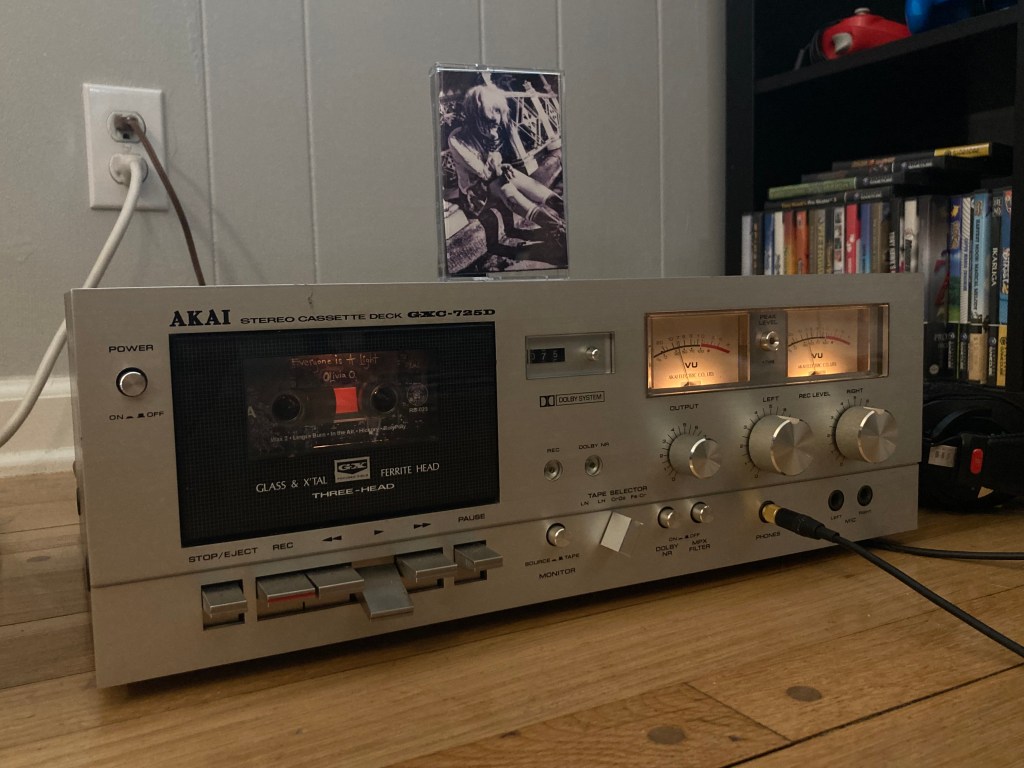
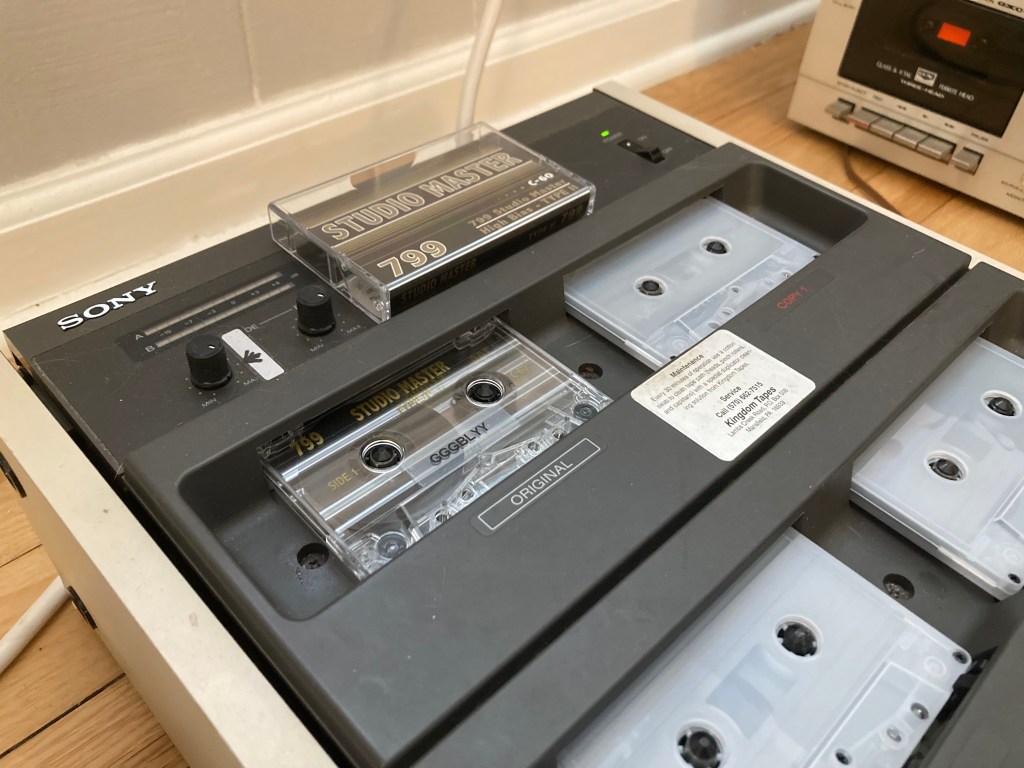


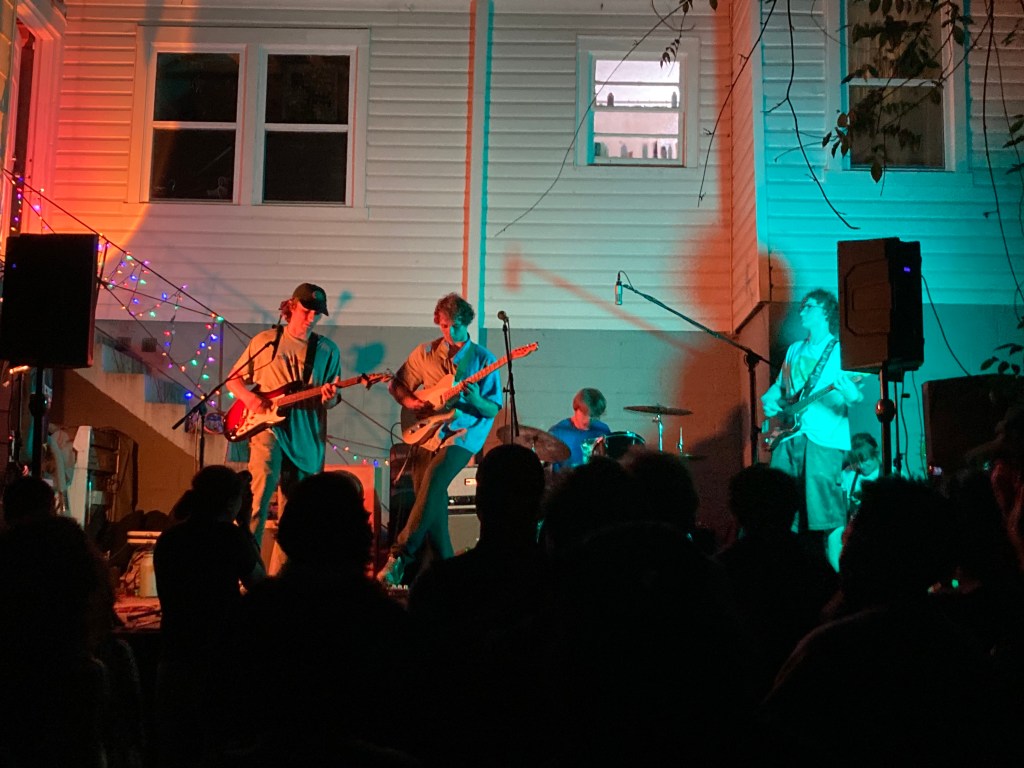
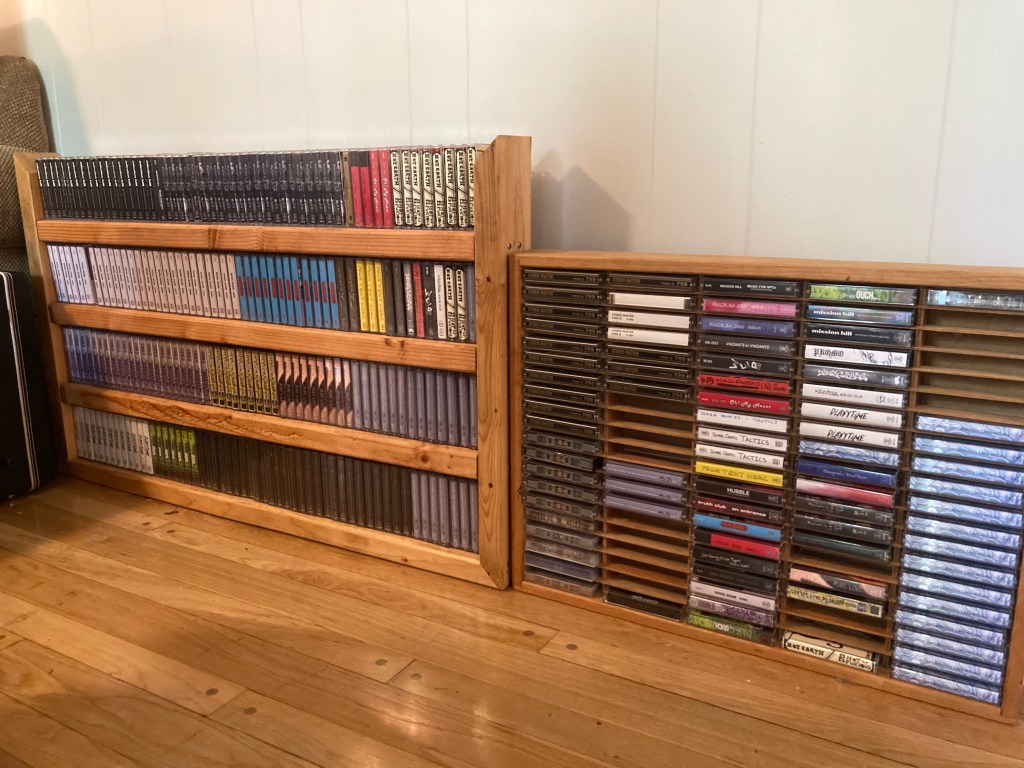


Pictured here is the process of making tapes. First, lossless files are played into the tape deck from a phone or computer, and recorded onto a master tape. Then, the master tape is placed in the duplicator with blank tapes, where the music is then recorded onto the blanks from the master tape. The inserts that go into the cases, known as J-cards, display the album artwork, title, credentials and other liner notes. Each one has to be hand cut and folded for each case. Stickers are also placed on the finished duplicates. Once they are packaged up, cassettes will often be sold at shows. Pictured here, Strumbrush’s debut album “Whirlwind” on cassette, sold at their album release show. Pictured on the bottom are Myers’ tape collection and Balsamo’s vendor table at a recent festival.
Sustainability and Community
Since most of Atlanta’s DIY tape labels operate on a non-profit basis, it can be easy to assume that running a tape label is not sustainable. Both Balsamo and Myers argue otherwise, stating that tape labels are perfectly sustainable with the support of the scene. “Without the scene, you don’t have a label. If people aren’t gonna buy your stuff, then you’re gonna go bankrupt really quick,” said Balsamo. “I think it’s sustainable if you have a job, and if you’re smart. It’s sustainable if you’re doing it right.”
“As long as everyone in the community is participating, and there’s an audience that wants what you’re making, then it’s sustainable,” said Myers. “DIY is the way it’s gotta be, but it’s a beautiful thing. It encourages community. It is art in itself. And that’s what we’re all here for.”
Because of how difficult it is to break into the music industry on your own, the DIY scene is a closely knit web of collaborators. Every band is intimately familiar with each other in the scene because they have to work together. Bands will collaborate, often sharing members and equipment, concert bills, living space and more.
“DIY is an amazing thing. The community of bands that are at this level is super cool, because you can reach out to people that you’ve never spoken to before, and ask if they want to do a show, and they’re like, ‘Oh, I know your band. Yeah, let’s try and make this work, and we can sleep on my floor after’ It’s a super generous community,” said Jack Kern, guitarist and vocalist of Bummer Hill.
Since bands support each other so much, there isn’t necessarily competition or bad blood between labels or bands. Balsamo said that even if there was, it would quickly be resolved because everyone participates in the scene for the sole purposes of uplifting artists and celebrating music. “I really see it as a family. At the end of the day, we’re helping build the scene. We’re helping bands out and we’re building our labels,” said Balsamo.
Growth and Success
According to Myers, there have always been tape labels in Atlanta, but there are more than ever now to keep up with such an active scene. A number of bands have released records in the past two years, stoking the fires that they have lit under themselves by playing shows and gaining fans, leading to multiple tours, a huge uptick in shows and lots of work for tape labels. All this is to say, the scene is steadily growing, and each band is quickly making a name for themselves. “I always see growth in the scene, of course, because there’s always new people doing it …I do see a lot of newer bands in Atlanta feeling confident in their abilities,” said Myers.
“The growth is probably in the confidence of these bands. And people feel comfortable participating in the scene, and meeting people and thinking like, ‘Oh my god, we met so-and-so, we have a physical like, should we go on tour?’ Like, that’s cool,” said Myers. “Each band will have their own personal inspiration to feel like they can go further. But there are a lot of bands right now who are so confident, and feel like they can make something happen; rightly so, because they are making amazing music.”
Guitarist of Buice and Strumbrush Jack Pace shares his thoughts on the growth of the scene: “It’s really inspiring. It feels like a local show in the sense that I’m seeing my friends, but it doesn’t feel like a local show in terms of quality. When I go to a show, it just feels like I’m seeing a really cool band.” As guitarist of two of the scene’s more popular bands, Pace has placed full faith into his musical endeavors and into the scene.
“Everything in my life is just channeled into making these projects succeed because I believe so much in them, and this scene as a whole,” said Pace. “Because I really do think that a lot of the things going on in Atlanta music right now, once some of these bands go on a couple of tours, will be something that more of the country, and even the world will know about if someone hits the right internet threads. I think a lot of people will be talking about this pretty soon.”
“I think the Atlanta scene right now is on a huge come up. Big Yellow, for example, started as a very small band. Now they’re going on tour. They have a huge fan base. They’re selling out tapes,” said Balsamo. “I think we can see that Atlanta is in a very good position right now, with the amount of shows being booked, the amount of bands like getting merch made, and going on tour. And it’s just a very good time to be in the scene right now.”
 tristanlewisJOUR4488
Leave a comment