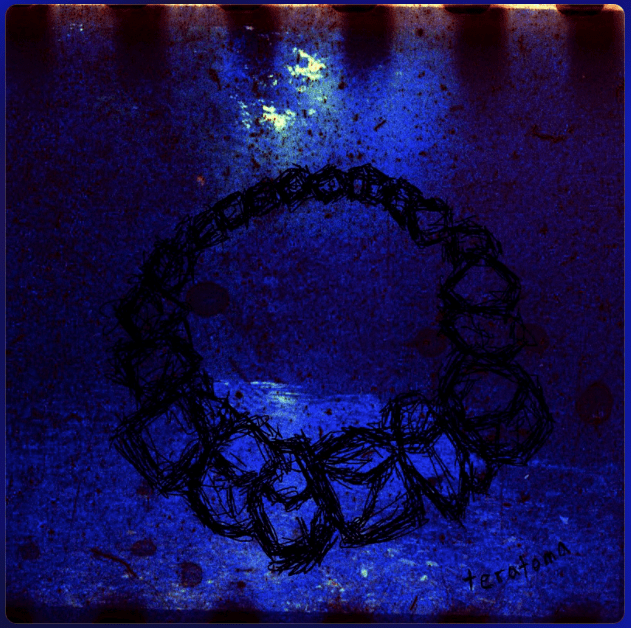

In DIY music, bands can be started and ended on a weekly basis. Bands will break up just as quickly as they form, for any manner of reasons. Some last, and some don’t. DIY scenes are closely knit, as young musicians build a web of connections in order to foster their growth. People have to support each other, and marketing is synonymous with making friends.
One such band that has emerged from the Atlanta DIY scene in the past few years is a band called 15,000 Guns. 15,000 Guns has recently announced its dissolution, and the band will play its last show for the foreseeable future on April 27. Most of the time, when bands break up, there’s drama, spite and bad blood. For 15,000 Guns, the reason behind the breakup is much more innocent and simple; the members are done with school.
Early History
Formed by Michael Mendelson in early 2021, alongside Andreas Paljug on bass, Sawyer Flanagan on drums and Josh Rubin on guitar, 15,000 Guns became one of Atlanta’s premiere noise-rock bands. Both originally from Pittsburgh, Mendelson and Paljug went to Georgia Tech for college. Mendelson played with Flanagan in the Georgia Tech Jazz Ensemble, and from there the band began to form. Rubin, who was met through jam sessions, was added to the band and the initial lineup was complete. Paljug would later be replaced by Jimmy Huang on bass sometime in 2022. Huang was first a friend of the band that they had initially met through a club called the Georgia Tech Musician’s Network. But, according to Flanagan, “I found Jimmy on Tinder. It was Grindr actually.”
Incidentally, the band was, and still is, composed entirely of engineers. Shortly after forming, the band played its first ever show in April of 2021 at Georgia Tech’s 1,000 Couches festival. After that, “We wrote a bunch of songs over that summer when we started sort of living together … we recorded the first album in September or October of 2021,” Mendelson said.
“We decided that for our first show, we were going to wear a whole bunch of really dumb stuff that we found at Goodwill,” said Rubin. “Michael wore an oversized suit. I think I wore like half of a bathrobe.”
As for the name 15,000 Guns, often shortened to 15K, Rubin recounts that “We found a hat for a gun store in Smyrna where their slogan or catchphrase or whatever, was just ‘Over 15,000 guns in stock’, and we’re like, ‘Wow, that’s a lot.’ That’s a lot of guns. How absurd.”
“We put the hat back and walked out of Goodwill. And then we were like, ‘Hey, 15,000 Guns,” said Rubin. “It’s kind of funny. We never bought the hat.”
Making a Name
The first 15,000 Guns album, a self-titled project spanning five songs and 36 minutes, was a heavily jam-oriented project, said Mendelson. Before the release of their first album, the band had begun to create buzz by playing shows. The band’s identity is largely characterized by absurdism, as most noise-rock is, with hilarious song names and storytelling based lyrics, unpredictable song structure and creative use of effects. Despite this, the band possesses serious musicianship. The first album features two extensive tracks, titled “George Bush’s Balls” and “Blunt Force Trauma to the Head,” both clocking in at over 10 minutes long. Each of the songs on the album feature layers of effects and complex interplay between Mendelson and Rubin on guitar. Despite the length of some songs, the album is still full of intensity, full-on noise freakouts, and sometimes stretches of quiet trance-like repetition.
After the release of the first album, the band continued to play and create a name for themselves. Most of the networking process in the DIY scene is done through joint bills with other bands in the scene, with each band supporting their peers. Around the same time, bands like Buice, Vangas, and Big Yellow were also gaining notoriety, dubbing the Atlanta brand of noise-rock “freakcore.” The handful of bands that identify with freakcore are largely characterized by frantic, abrasive, heavy-hitting, and very loud music. Songs can be complex or straightforward, long or short, but will almost always feature heavy usage of effects and reach exceedingly high volumes. According to Mendelson, “We all came together through a mutual love of the whole Windmill scene,” referring to a music scene centered around a music venue called the Windmill in Brixton, London that rose to prominence around 2020 in the UK. At the forefront of the scene was black midi, a noise-rock band that has since inspired many, such as the members of 15K and their peers.
Teratoma
As 2022 came to a close, 15K would shack up to work on the band’s swan song, “Teratoma.” For “Teratoma,” the band took a different approach than they had taken for their first album. Instead of a jam-oriented approach where songs would come into fruition by developing over time, the band decided to write ahead of time. “It was a lot of someone bringing something into the practice one day, and then we kind of wrote around it and tried to see how we can kind of go forward with it,” said Flanagan.
“We locked ourselves in our practice space for like three or four days in December when we had off for the holidays. The week after we got off we all just stayed there before going home and spent like 12 hours a day trying to write,” said Mendelson. “That’s kind of where all of the songs in the album came from, except for like one or two more that were added after. It was very fun. Me and Sawyer almost killed each other like seven times.”
“Teratoma” was released in 2023, around the same time as many other projects, including Vangas’ self-titled album, Big Yellow’s “Lofi Panic”, Buice’s “One Day You’ll See the Sun”, and Downgrade’s “Absence Speaks.” Each of the bands promoted each other’s releases, and each record was well-received within the community. The names of each band had hit new levels of notoriety with their blends of shoegaze, punk, hardcore and noise-rock.
For “Teratoma,” the band had opted to use the money they made from playing shows and selling merchandise to fund the recording process of the album. “At a certain point, we had to admit that this music is actually kind of good,” said Flanagan. So, the band decided to get serious for album two.
“Somehow people started to listen to us, so we started to get booked for shows, which came with money from selling merch. So, the next big step to being more serious and making better music was paying someone to record, mix and master our music,” said Mendelson.
“We paid for studio time with Graham Tavel at Mirror Mirror recordings, the big Atlanta-DIY-recording legend. Jesse Mangum mastered it. And I think that’s just why it sounds a lot better than the first album,” said Mendelson. “Other than that, we partnered up with some tape labels like Rope Bridge and Familiar Face to distribute it.”
Tape labels such as Rope Bridge and Familiar Face exist purely to foster the growth of local bands. All the bands have to do is approach them and ask for help distributing their music. Some labels will even help with booking shows with more well-known bands to gain more exposure for smaller bands. For one, the owner of Rope Bride, Ryan Myers, does almost everything out of pocket so that bands can take home more profits. The tape labels also make cassette tapes for bands to sell as merchandise.
The result of a more refined writing process, paid studio time, and distribution was a much more successful album release. “Teratoma” has been heralded as one of the best albums of 2023 by many in the community, and it brought a lot of attention towards 15K. “I think we were all surprised at the reception it got, but I was really proud of it. I think that’s probably some of the best music that I feel like I’ve written,” said Mendelson.
It’s easy to see why the album was as well-received as it was. The music of “Teratoma” is incredibly creative in its own right. At nine tracks and 42 minutes long, “Teratoma” is a DIY masterpiece. The opener of the album, “The Blade Goes Deeper, I Love You More” features a makeshift instrument; a saw with a contact microphone attached to it. In a recorded performance of 15K’s album release show, Mendelson can be seen switching between the saw and the guitar while performing. “Influence” sees Rubin switching to slide guitar in the middle of the song, and “In My Angel Eyes You” also heavily features slide guitar; at the album release show, the opening section was played with a metal water bottle. “Ghormeh Sabzi” features Rubin’s application of a pitch shifted guitar over a tight drum beat, which devolves into a cacophony of swirling noise by the end of the track. The closer of the album, “Teratoma Testimony/Teratoma Tragedy” is a two-part song that spans nearly ten minutes, and features a dizzying amount of sections, eventually ending with an atmospheric pause before breaking into a wall of sound. Seeing that this song is 15K’s last song, it truly does feel like a tragedy.
Breakup
As for the reasons behind the band’s splitting, the band cites that they are simply done with school and will no longer be able to play together. “The end has kind of been unavoidable given that we’ve all been in college. I’ve been kind of anticipating it. We graduate, people move away, and I think given the time we had and knowing that, I’m pretty satisfied with what we did,” said Rubin.
Although the band will be splitting up, some of the members will still be active. Rubin, who also plays in Buice, will remain in Atlanta. Buice is scheduled to go on a short East Coast tour next month. Flanagan will also remain in Atlanta for the time being, and is searching for a new band to play with. Huang jokingly stated that he is quitting music forever, despite being in two other bands: Boywifer, and K.R. Badlands, alongside Mendelson.
Mendelson and Huang are moving away from Atlanta to pursue their careers. “All things come to an end eventually. I think we could have easily kept going. But, ending here is as good a time as any. There’s no good time for it. All bands have a life cycle,” said Flanagan. While it is true that the band will be unable to play together for the foreseeable future, the possibility of a reunion is not entirely out of the window, according to Mendelson.
“I feel pretty happy. I feel like it’s a good ending point. Just because I feel like we’ve achieved a lot more than we ever set out to achieve,” said Mendelson. “I feel like we’re all definitely very proud of what we achieved in the limited time we had. I feel like I can speak for everyone when I say we never expected to have this many people listening to us.”
Originally, this band of engineers came together for fun. “We definitely never thought we were gonna get any sort of local status or following. Everyone was just itching, like, I gotta be in a band,” said Mendelson. But, through their talent and support from the local scene, 15,000 Guns was able to become so much more. The ultimate goal of the band though, as stated by Mendelson, is for the band’s music to someday be used in the score of a cult classic film; “The Elliot Smith treatment.”
The band will play their last show together on April 27, and will be joined by Newgrounds Death Rugby, Floral Print, and Boywifer. When asked what they planned on doing for the last show, Rubin said “We’re gonna play a bunch of covers. We are probably gonna play the blue album (self-titled) and “Pinkerton” by Weezer back to back, and then “Aja” in its entirety.”
“Newgrounds Death Rugby is playing as well, it’ll be fun. They’re gonna play a really good set, and then we’re gonna play a really sloppy two hour set and then bring out a bunch of champagne at the end,” said Mendelson. “It’ll be fun.”
 tristanlewisJOUR4488
Leave a comment