Cobb County Schools and schools across the country are expanding their libraries into learning commons.
What are learning commons?
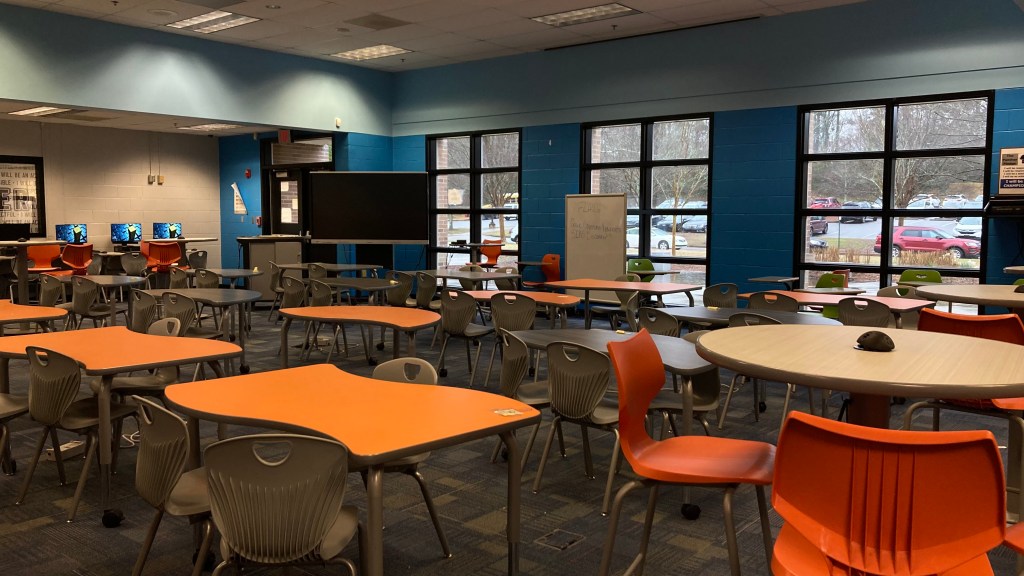
Learning commons at Palmer Middle School in Kennesaw, Ga.
Learning commons, as described by Palmer Middle School media center specialist Taylor Wickline, are “a place that is so much more than just checking out books.”
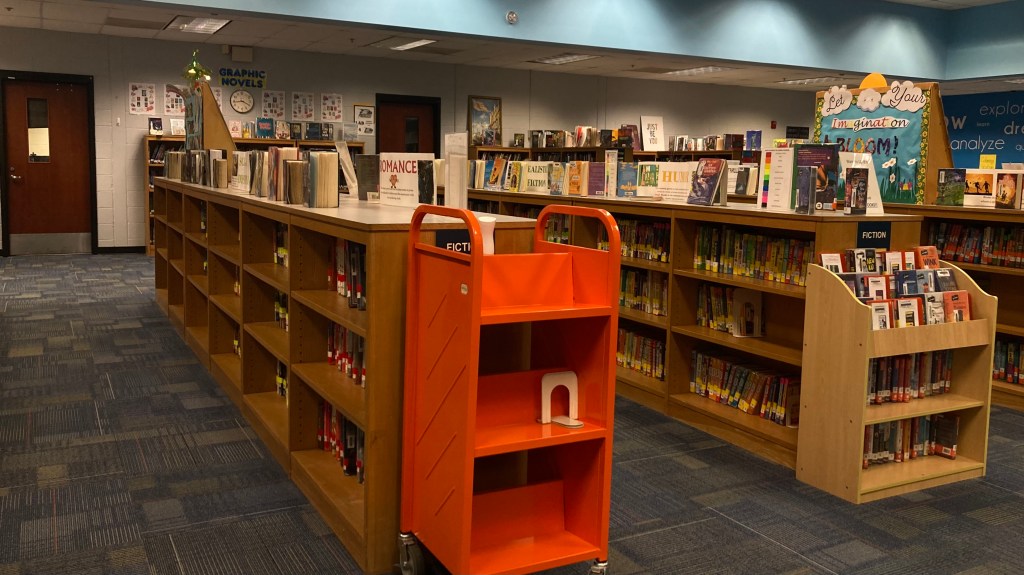
Books line the shelves at Palmer Middle, just behind the tables of the commons.
What’s the Difference?
Over the years, schools across the country have worked to remodel libraries into a space for collaboration between students and teachers, as well as including more access to technology.

Tables are arranged in front of a large screen for lessons, presentations, and discussions.
“When lessons aren’t taking place, students might be coming in to socialize, use technology to create projects independently, or they can come in here and work,” said Wickline. “It’s a very collaborative space, where a lot of different things are going on at one time.”
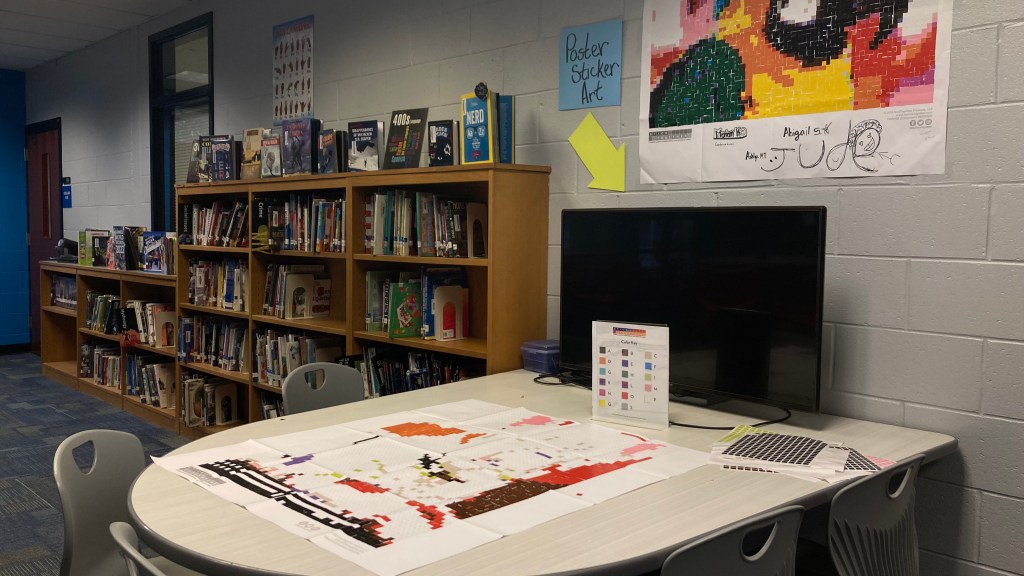
A collaboration station at Palmer Middle.
Within the learning commons, there are multiple groups of tables and chairs for students and teachers to gather at. One of such groups is referred to as a “collaboration station,” which serves as a smaller scale presentation area for students. “Part of the idea of the learning commons is multiple ways for different devices to plug in,” said Wickline. “At a collaboration station, people could plug in a phone, laptop or iPad to one TV. You can switch between each device and discuss whatever you’re working on.”

Most of the furniture now sits on rollers, which allows for easy rearranging.
Another one of the changes, as pictured, is the emphasis on chairs and tables being easily movable to allow for more fluid collaboration. Most Cobb schools also have devices available for each student to use, widening possibilities for the utilization of the learning commons even more. “We were also able to get laptops instead of desktops, which just gave us even more flexibility,” said Wickline.
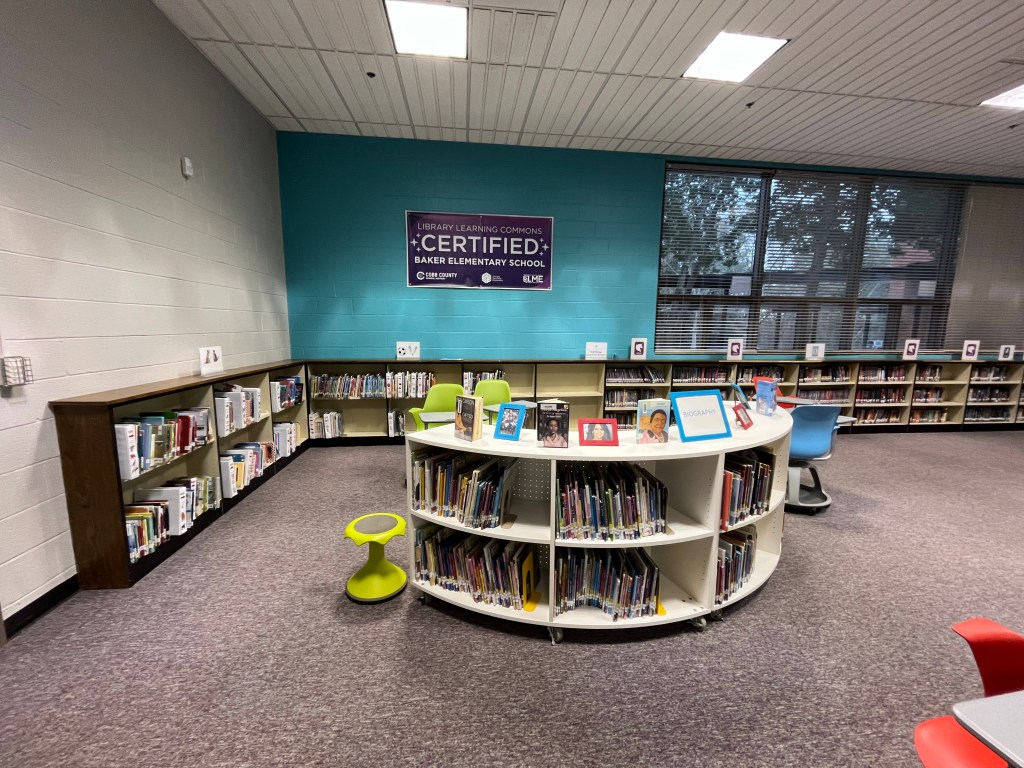
The learning commons certification is on display on the wall of the Baker Elementary in Acworth, Ga.
To transition to a learning commons from a library, a certification must be acquired. Based on measured usage of libraries, schools can apply to receive additional funding to stock their libraries with technology for students’ usage.
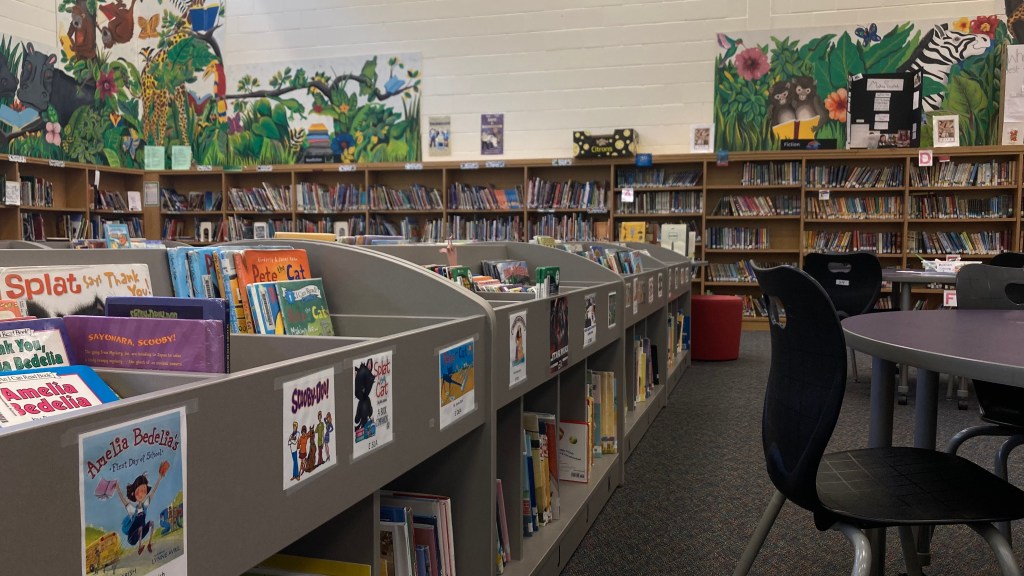
Chalker Elementary also follows the learning commons model while working towards certification.
Part of the process, as detailed by Wickline, was “[giving] statistics about how much circulation we had, how much collaborative teaching I was doing. And then our school system gave us the money to do the physical transformation.”
What are libraries doing?
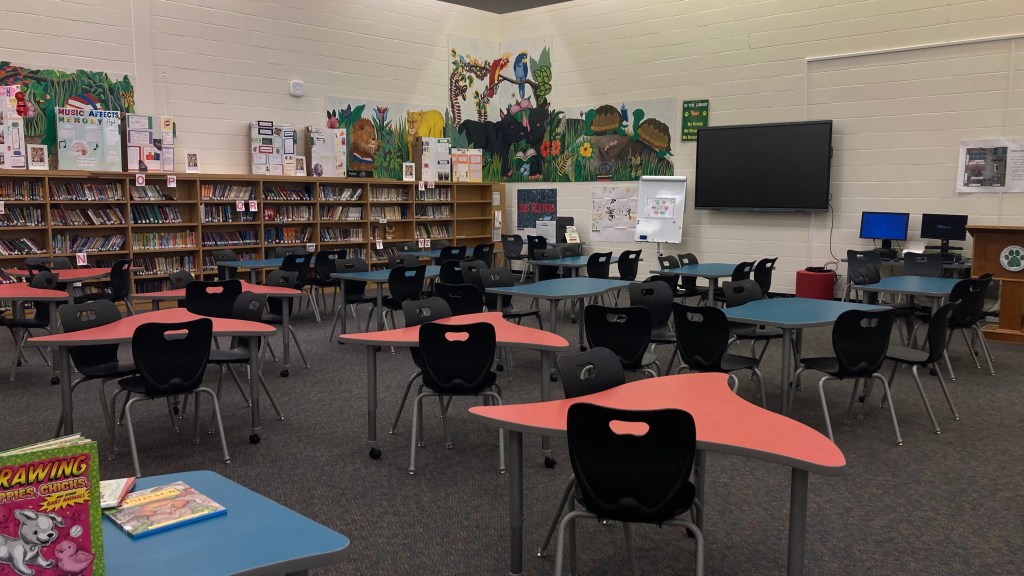
Tables and chairs occupy the library of Chalker Elementary, alongside bookshelves.
Schools that have yet to receive certifications, such as Chalker Elementary in Kennesaw, Ga., have still taken steps towards the learning commons model. While there are still plenty of books available, the layout of the library is now modeled around collaboration. “We are trying to work in that direction. One of the qualifications is dedicated spaces; for whole group lessons, for reading areas, for working areas, different things like that,” said Chalker Elementary media center specialist Ashley Bellamy.
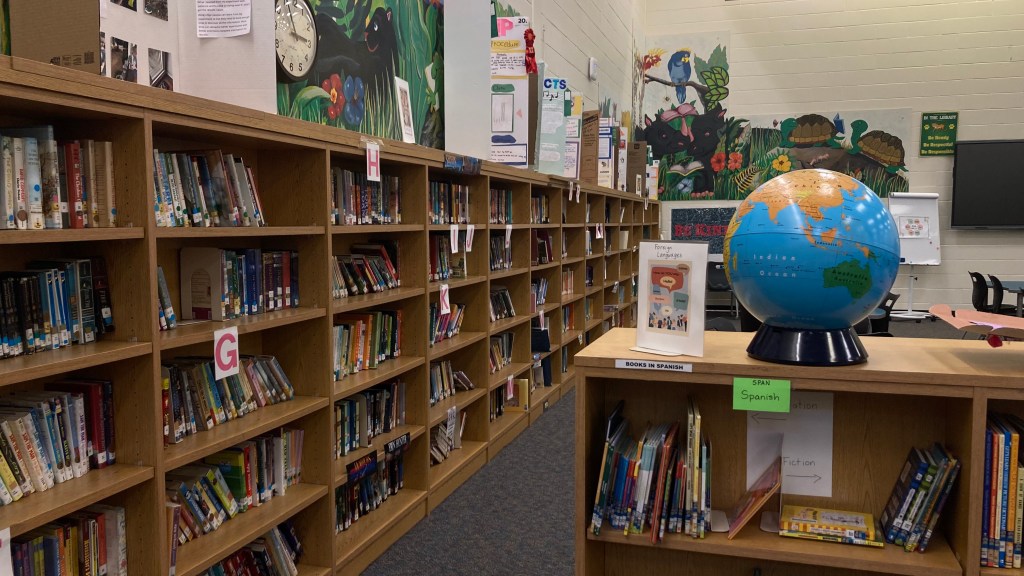
Although moving towards a learning commons model, Chalker still has an extensive library.
While learning commons may not be centered around books, that doesn’t mean there are any less of them, or that the focus on reading is any less. “There’s a big push for encouraging a culture of reading throughout schools,” said Bellamy. Despite the greater inclusion of technology, “Reading is still definitely foundational, there’s not any sort of moving away from that. It’s just an addition of technological literacy on top.”
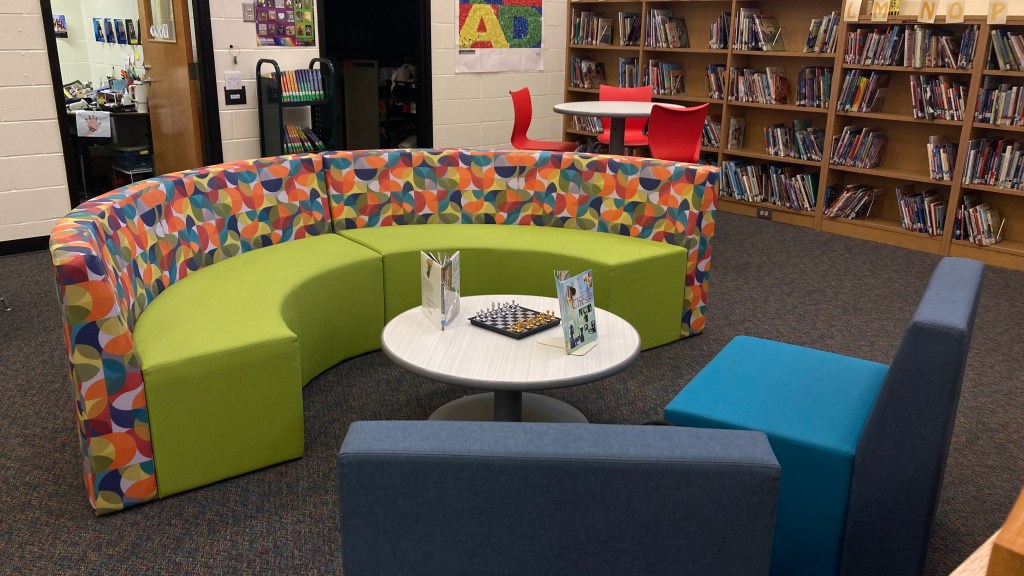
A separate area of chairs is included for one-on-one interaction, or independent reading.
The space is utilized by librarians and teachers alike, for both collaborative work, lessons, and independent meetings. “If I’m pulling students for a small group, or to do singular lesson plans one-on-one, or any sort of tutoring, that’s when I work in the media center library,” said Erin Hilsman, a student teacher at Chalker Elementary. The learning commons model has proven so far that it is versatile and useful, truly making libraries “a place that is so much more than just checking out books.”
 tristanlewisJOUR4488
Leave a comment